
How do you lead the sales team the human way? Understand what the people around you are going through so you can meet them where they are and love them for who they are. Empathy is a sure sign of strong leadership. Lance Tyson’s guest in this episode is Scott McGohan, the CEO of McGohan Brabender. Scott’s story encompasses the people element of sales, but with a unique twist that would make Ben Franklin proud. Scott, by his admission, started his journey as a destructive hero. Now, he encourages his people to discover and live their personal values. According to Scott, you must like yourself and have a good relationship with yourself to sell well. Listen to this episode, and you’ll come away ready to renew your investment in your personal growth. Tune in!
—
Listen to the podcast here:
How To Lead The Sales Team With Compassion With Scott McGohan
I’m excited about this episode. This is somebody that I’ve had almost a decade-plus relationship. We had been deep in the trenches with them. Scott McGohan is the CEO of McGohan Brabender, who is a very big regional player as it relates to health benefits and strategic thinking around that. I’ve learned so much from this person over the year. Scott, welcome to the show. I’m excited to have you.
Thanks for having me. I appreciate it very much.
Tell everybody a little bit about a McGohan Brabender from your end, your responsibilities and what that looks like for people who might not be familiar?

We serve 1,200 employers out of our four offices in Indianapolis, Columbus, Cincinnati and Dayton. We represent about 125,000 employees. I like to say a quarter of a million belly buttons, moms, dads, kids, and about $1.5 billion of healthcare spend. We manage benefits for organizations. We hope people don’t think we sell insurance because that would be a miserable existence. What we do is we help employers empower them with decisions so they can get back to doing what they love to do and that’s to grow their company, product, services and workforce. We love what we do.
When I think about the way you think about business and approach marketplace, I go back to several years ago when your organization probably still doesn’t educate employers about metabolic syndrome and all those things that cause risk, as we try to take care of our employees as they age and the strategy around that. More important with you, the passion around how you’re going to educate the C-suite, I think that’s when Obamacare at first came out of what you taught me there. Talk a little bit about your business, that strategic thinking and how that strategic thinking around the customer turns into marketing and sales because I think that’s your genius at the end of the day.
One of the things is I like to give ourselves a bunch of credit for what we’ve done. Legislatively they always say, “When you think of change, you can either do it yourself or be forced to it.” When the government changed our industry, we were forced to do two things. Number one is we could be self-serving and protective about what we do. Try to hire lobbyists to protect our industry, which a lot of firms did. We were like, “Forget it. We’re not going to do that. This is complicated.”
We provide service value and knowledge. Our customers are going to be confused. Let’s be students. Let’s educate customers in regards to this legislative mountain. Let’s be brave in understanding it knowing at the end there’ll be a business on the other side of it. We tore down everything we knew about what we were doing and said, “Let’s start all over.”
One of the biggest things you taught me is the difference between a president of an organization to a CEO. What I learned from you as a CEO, it’s looking forward, looking at that mountain or how to evolve. I looked at that time and I was like, “This person understands how he’s going to not turn a battleship, but take on a wave and be able to wrap yourself around it.” You’ve done that and McGohan Brabender has evolved since. You’ve had a lot of great people around you, but it also takes a lot of strategic direction. How many folks do you have in sales traditionally? How many people support sales because you’re in a very competitive space? The industry you do is so competitive.
We have 23 people with their feet on the ground selling inside of an organization that right now is at 200 people. There’s a difference between people that are in sales and a difference between two people that are selling. You taught us that.
Keep being useful for people, and they will always come back.
What always fascinates me about you is I remember, and I know it could still happen now. Within two seconds, you could hop on the phone, and you’re running this large organization, that you can jump right into any sales situation anytime and do it as well as somebody that doesn’t 24/7. Let’s talk a little bit about your mentality around selling. To me, it’s a very servant sales model that you have because, as you said before, “It’s embracing change and the customer.” You always can see it through the customer’s eyes. Talk about that philosophy and where that comes from because it’s special.
I learned it from my dad. I took him on a prospect call with me. We go there, put together this big binder and his presentation was awesome. I’m young, got two kids at home, trying to put food on the table. We go into this meeting and my dad takes the binder from me. He doesn’t even open it up and talks to the guy for like an hour and finally tells a guy his name was Todd. He goes, “Todd, I don’t know who your broker is, but they’re doing a great job. If anything ever happens, I hope one day you call us.”
I get in the car and I’m like, “What did you do? I spent hours on that.” He said this and I’ll never forget it. He said, “Scott, your job is to be useful to people. The other person that was serving that organization was useful. You keep being useful for people and those people will always come back.” Sure enough, two years later, the guy picked up the phone, that consultant dropped the ball. We’ve had that customer for 25 years. I love speed. I want to go real fast but what he taught me was if I can stay humble, authentic and useful, if I play the long game, I’m going to be in great shape.
Somebody said to me, “Slow is smooth, smooth is fast.” I think about your dad and in that general vicinity, you are. He was always methodical with his questions and he would always take his time. He told me one time and you talk about a great business person. I remember it this way so you tell me if it’s true. Whoever was at the front desk, when a vendor would come in, wouldn’t he ask how that vendor treated the person at the front desk? I’ve told that for years. I hope I didn’t change it in my head. Treating people is so important to him.
Even our new hires, when we do an interview with our recruiter. The first person we’ll call is the front desk. We’ll call Cathy. “What’d you think of so-and-so?” If they say, “Who?” If they say, “You mean Joe?” He was amazing, polite, courteous and friendly. That’s why Cathy at the front’s called the first impressions team. I started back in the day to Lance, where you could knock on the front door and walk right in the front door of a company, but that person at the front desk is the gatekeeper of the organization.
Talk about your trajectory. You’re running a large organization right now. Where did you have to start in it? As you got into the business world, where did you start? Was it at MB or was it somewhere else? Can you talk us through that? How’d you migrate into sales?
I worked as Tim Brabender’s assistant. I had a desk that was probably about four feet inside of a cube. My uncle gave me good advice. He passed away, but he said, “Scott, sit down with Tim Brabender and have him make a list of everything he hates to do. Your job is to try to do everything he hates to do.” It was great advice.
My dad made it hard on me too. We had seven people back then. On my first day of work, it snowed outside. We built a new building, but he didn’t have anybody to shovel the parking lot. He said, “Go home and get my shovel out of the garage. Put some jeans on and shovel.” I’m thinking, “What?” All the people were outside watching. It was hard, Lance. I needed a big piece of humble pie. I was an arrogant, pompous, probably jerk back then and I needed that. He knew it and kept spoonfeeding me the humble pie.

How many years ago? When did you start in the business?
It was 32 years ago in 2021. I was Tim’s assistant for two years, knowing I wanted to go into sales and that’s where I wanted to go. As soon as I got that cord cut, I jumped in. Back then, we didn’t have computers. We hand wrote on spreadsheets. My prospect list was a phone book and I sold loose diamonds in New York City. When I was there, I used to have to cold call and make appointments as I traveled around the country. If you were going to get in a car and drive around to different states, you had to have meetings. I wasn’t afraid to call anybody. Plus, when I started there, the person that trained me sat right in front of me as I was making cold calls one after another. The guy would hang up on me and he goes, “Make another one.”
Before you started, you sold what again? I know you told me this once before. What were you doing again?
Loose diamonds.
How did you get that job?
They called me Johnny Gentile. I was the only blonde-haired, blue-eyed kid there. During the gold boom, my dad owned part of a coin store where they bought gold. I ended up working with my brother at a jewelry store here in Dayton called International Diamond. We sold jewelry there and then I ended up working for one of my dad’s friends down in Cincinnati. They owned a place called Diamond Showcase. It’s where I met my wife.
When I was buying loose diamonds, a guy came in and offered me a job. I traveled around the country behind the wheel of a car before cell phones. I drove around. My dad works a lot. He grew up in a family of eight brothers and sisters in a two-bedroom house. My dad worked hard and was a great guy but growing up, I didn’t see a lot of my dad. I knew if I stayed in that industry and traveled, it was fun and glamorous, but I couldn’t coach soccer, hang out with my kids and I wanted to stay local. I called them and said, “Can I come to work for you?” He said, “Go back to school.” I was, “Go back to school? What are you talking about?” Sure enough, back to Miami University, working full-time, married, going to school full-time.
You made a decision why do you want to sell loose diamonds. From then to now, that one job had made you do what? What did you pick up from that you never had forgotten or an approach they still have? That’s rough and tumble.
This might sound way too noble and virtuous but what I’ve learned about myself is back then, I didn’t like myself and I was trying to fit in everywhere. I was a chameleon and damn good at it and paid well for doing it. When I found myself and I could end up being a friend of Scott, I could sell tires and be the same guy. I don’t think it matters what I do, what I sell? If I’ve got a great relationship with myself and I’m vulnerable, honest, and humble, that’s hopefully the gift that I can give people sitting in the walls of MB.
Have a great relationship with yourself and be vulnerable, honest, and humble.
One of the things that you taught me that I’ll never forget. I say to my sons and I say to myself, “I always thought I had a handle on that relationship with myself.” You’ve taught me sometimes your mind was like a bad neighbor. It’s not going to be alone in it. I will owe you that for the rest of my life. In the last couple of years, for me, between COVID, there has been a couple of conversations with myself that I should not be having with myself.
I can laugh at it, but those words have rung true for me, like nothing else. I think that self-relationship that you have 100% taught me more so than anybody else. You can have a big personality, but you have to be humble too. You can create your own world, I think also. You make yourself valuable to Tim Brabender. Your dad holds you back. You aren’t going to the sales right away. Knowing you, you probably were ready from day one. The day you were shoveling the driveway, you were ready to go. What was the transition after his assistance? Do you get into sales?
I get into sales. Back then, it was great. We had no protected client. I could call anybody. I’ll give you an example. I called a founder. I’m at my dad’s office. I’m like, “I’ll call him.” He goes, “No. You don’t know him.” I’m like, “I don’t care.” I called him. I’m 24 years old and I have no idea. I’ll tell you something cool that Clay did too. He said, “Scott, I don’t have the benefits here but there’s a guy here.” I said, “Thank you.” He said, “Good luck in your career. Keep doing what you’re doing. You’re going to do well in life.” I’ve never forgotten that.
I ended up calling the guy. He told me to call him and that guy knew, I knew nothing. He knew I knew zero. Probably, 7 or 8 years later, it was great. I was told Tim Brabender, he said, “Scott, I have eight things happen all at one time.” Have eight activities, customers or prospects you’re talking to. Two or three will fall, but you always got to keep eight alive. If you don’t have eight alive, things are going to get bad.
With all the work you and I have done over the years. I think things that frustrate me and I know what frustrates you, like some of the blinding flashes of the obvious. When you were in sales, like your dad said, “He kept feeding you the humble pie.” As somebody who is leading you when you were in sales, what was challenging about leading Scott? I can only imagine. What were you as a salesperson?
I was defined as a destructive hero. I was a successful founder’s son, arrogant and pompous. I thought I was the smartest guy in the room and that was hard for people to deal with. I did all that and I told you this before is because I didn’t have much respect for myself. My assistant Victoria came into my office one day and said, “You got values painted on the wall. You don’t exhibit one of them. You took my own values every day. This is my last day.” That was a wake-up call.
That’s when I met Pete Kunk and I said, “I think I’m a sick dude and I need some help.” I’m like, “If I got some help and I gave you access, would you give me a shot?” She said, “As long as we can ask each other three questions every day, am I okay? Are you okay? Are we okay?” As hard as that was, that’s probably one of the best gifts that I’ve ever gotten is somebody that was willing to tell me the truth.
It’s somebody that you trust and you saw the value in her because you’re like, “Where are you going? I need you.”
Even that was a lie back then. Do you know why I did it? This is the honest truth. I was more worried about what people would think about me if she left than her leaving. I was this big dude. I did it not out of virtue or at a nobility, zero. I did it to cover my own rear end. In that, I found some beautiful things on the other side of that. I’m not patting myself on the back because I didn’t have much virtue in that hard work.
I can tell you the transformation because Scott and I had many tough conversations, and it was an ego list because we’re both at a spot where we wanted to make things better and he means it when he says it. Let’s talk about strategy and tax. You’re one of the best negotiators I know because you’re usually trying to connect. I also think you’re highly into tailoring a solution. What were your strong suits from a skillset or capacity whether it was a negotiation, good at asking questions or presenting? What were your main go-to when you sold day-to-day?

One is I love accounting in school. What I appreciated was I always wanted to act like I was sitting on the other side of the table. If I understood financially what the impact of benefits was and I’d say, “An 8% increase is not a bad increase.” It’s not a bad increase unless you’re in a business with a 2% margin. That’s a big increase. All of a sudden, you increased that sales goal by 25%. It was having the understanding of the financial impact, additionally, is people in our industry, they talked to human resources. They’re all creative, got all these great ideas and grandiose strategies and HR, you know what they hear? Work. In other words, the strategy would be, “Part of my job is to identify what you love to do.”
HR might say, “I love recruiting.” Great. Do you know what to do? I’d love to take things out of your desk that allows you to go do what you love to do, which is to recruit. We can do that for you. Instead of talking all about benefits and what we did, it was identified what was important to them? How could I use what we had to allow them to go do what they love to do? Not in a selfish way, in a real, honest, open and candid way.
When I think about where I aligned with you and that’s always important when you’re doing work with somebody. It’s not always about relationships. It’s about credibility. Sometimes it’s about being an agitator, not in a bad way but being able to do that. I always felt your approach from a leadership or a sales standpoint. Even from a marketing standpoint, that you never started at the problem or opportunity. I felt you always went through the door first, the person, problem and then some payout. You never skip the person.
I remember hopping on a plane one time and you said, “You’re killing the culture, Lance. You’re a culture killer.” I’m going, “I don’t think I’ve ever been called a culture killer.” When you describe the frustration around the people, I took that coaching to heart. That coaching lives with me because I didn’t want to skip the person and go right to the heart of the matter. I always thought I was, but you truly are that and you said it. When you sell, that is, and when you market, you’re attacking the person in front of everything.
I was telling our sales folks, I said, “Imagine if you walked on a car lot and the person selling you the car got paid the same, whether you drove home in your own car or bought a new one.” That’s what being useful is. In our business, whether they go to the anthem, united or they stay the same, we’re paid the same. Instead of trying to change the world, just change that person’s life for a minute. Give them hope that there’s less burden and frustration. There’s more safety and all of those things. Everybody wants to get to the end game fast. I learned that from my dad. My dad used to say, “Slow down.” I used to think he was clueless. He wasn’t clueless, he knew it will all work out.
I know you’re a big UD fan and to me, the business now is more about running a half-court offense. It’s not a run and gun. Play in lockouts, slow everything down and make a good pass. How long do you sell before you start to formally get into a management position? I want to go back to being healthy with yourself because I know you take servant leadership and connect them with people. Where did you struggle making the jump from sales, where it’s the glorification of the individual to also an ego-driven? We all know it, for all of us into leadership. What was that first struggle for you in that first position? Talk about your success.
Identify what you love to do.
It was when Victoria called me on the carpet and Pete Kunk involved in it. We get taught a lot in school, in college but to understand ourselves, it’s hard work. I started to see the real benefits of helping people understand what their core values were and what was most important to them. I started teaching classes inside of McGohan Brabender. One of them was called the CEO of view. Would you hire yourself? Are you on probation or would you fire yourself as the CEO? Your personal best. That life essential, I did three years of those. They were voluntary. The lunches were covered. I paid for lunch.
Probably 60% of the workforce showed up once a month and I loved it. I got fed through that because I enjoy public speaking. Also, I liked watching the impact that it had on people. People here thought, “Why are you doing that? You’re not getting paid to do that.” It gave me personal credibility. It also gave me credibility in the workforce. I also think the workforce understood. The story I told you about Victoria, I tell every new hire. I don’t use my past to beat up on myself. I use it to be useful to other people. I’ve got a real passion for individual personal growth.
I was listening to a podcast with Chip Wilson. He was the Founder of Lululemon. He sold it. I listened to his podcast and he was talking about the same thing. He was completely dedicated to Lulu’s early years. He’s since sold the business, but to go through that personal leadership and how much he was involved in the evolution of that. Number one, it helped him connect with people, somebody who could give back. He thought it was his personal responsibility as a business to grow that staff. He said, “That’s what made Lulu different early.”
Stephen Covey said, “The seven habits.” It went through Landmark and some other things, some Brian Tracy stuff. You also, as a leader, have made a major investment in your people into learning. I don’t know if you’re willing to go here but as an organization, you spend a big chunk of the operating budget on dedication, not industry stuff, but personal development. Talk about that because that’s a foundational leadership thing for you, even beyond what the industry calls for.
It probably started when we built that immersion room in the back. It’s 2,000 square feet and it’s to help our workforce understand what and how we do it? More importantly, why do we do it? Even when we decided to change our vision to empowering business and people. If we’re lucky, we’re creating healthier birthdays for people. There were a lot of people that’s like, “You’re crazy. That’s the dumbest thing I’ve ever heard.” That gets up in your head like, “Maybe it is stupid and not smart.” We kept plugging away 1.5% growth, 2% growth and 2.5% growth.
We believe in the fact that if we could find the victims, the naysayers, the bystanders in this company, move them out or convert them in. If we believed it, we were resolute in our words, our language and our commitment to our customers and our community, we could win not by selling insurance but by empowering business and empowering people. It’s hard. As a leader, the head trash gets up in your head, “What if they’re right? What if they’re wrong?”
The burning desire inside of me was around, “Does it feel right?” All of that is around storytelling. We spend a ton of time on communication. We do weekly emails to the entire workforce. We meet with our workforce once a month. We have employee meetings, surveys and leadership sessions. I could go on and on around what we do, hopefully for the workforce to let them know that we simply care.
One of the things I realized over time with your organization when I was with Dale Carnegie, Motorola was benchmarked at one point, in the mid-‘90s or early 2000s, as being an organization that’s dedicated to education. I heard one time that they spend 5% of the net operating budget on educating their employees. The thing I learned from you, though, is you don’t run off a customer satisfaction index as much as you run off an employee satisfaction index.
I always felt that way. I’ve been involved with some organizations whose culture is strong and some of their cultures are a cult. You can see it when you go in, but people stay at McGohan Brabender. I think that’s the tie. The average tenure of an MB employee has to be a lot of years. It’s ten-plus average.
Before the Affordable Care Act, we used to pride ourselves on 98% retention. Sometimes that’s not that good. We have the family wall, so 200 picture frames of people on the wall. Eighty percent of our workforce comes from referrals of family and friends from our workforce. Here’s what’s interesting, 80% of the workforce. They don’t feel they’re fairly compensated. The survey says 80% of the people would recommend a family or a friend, but 80% feel like they’re not fairly compensated. Why would you recommend a family or a friend to the organization?
We hire someone and we send flowers to their home before they’re even hired, the first week. I call them on the phone two days before they start, “Do you got any questions? Thanks for trusting MB.” Mike Suttman, the President, calls them after their first day, “Anything we can do for you?” The personal touches, personal handwritten notes and the letters in the mail. The other thing too, it’s not that complicated. It’s pretty simple.
When you think about a Net Promoter Score, it is more about, would you recommend a product or service to somebody else? The fact that 80% of the people who work for you come from a referral puts MB in Apple’s category in terms of Net Promoter Score when you look at it from a job standpoint. A lot of people that be here are client-facing between account managers and people that manage, take care and communicate to accounts. You have more of a traditional salesforce that is in front out hunting and the rest is farming.
What are some big things through the years, as you look at salespeople that frustrate you about salespeople, that you’re going, “If he’d only fix that, it would be better.” What are some things you like to celebrate? Maybe we’ll get into the MB Victory Cart. Everybody could have that but it’s a pretty good deal. It’s one of my favorites.
When you lead an organization and you don’t even have to lead it, if you care about your brand, everything matters, your tone and eye contact matter. We’re on a sales call and one of the virtual backgrounds looked like a nightclub, “Where’d you find that? That’s got to change. It’s going to change now.” Sometimes leaders want to be liked more than they want to be trusted. If you want to be trusted, sometimes you have to have tough conversations with people, but you can’t. You got to have them all the time, every time. If you don’t have a suit jacket on and you don’t have a tie on or you don’t look professional, then don’t get on a Zoom or a team call.
When somebody’s attitude is copping out, maybe you say, “I don’t think being in this building is a good idea for you right now. I think you need to go home.” One of the things that we’re trying to coach people is, “These are the things I need you to stop doing. These are the things I need you to keep doing and these are the things I want you to start doing.” It has to be done every time on time. The days of employee reviews, every six months, you’re going to get this big, huge can of whoop pulled out on you of everything he did. Have it at the moment.
As a leader, one of the greatest things you can do is walk around the building. Be around your people’s eyeballs, be in a relationship but not in their role. The Victory Cart, it’s a huge cart. We’ve got one in every office and somebody sells something amazing. We ring the bell and we run them around the building. The whole office comes and celebrates, but we’ll do that when somebody passes a test or has a huge anniversary.
You celebrate and it’s not false because it’s a little victory and a big victory. I remember when you were building your inside sales team, which you got a great crop from, they’ve been to the most minuscule appointment, but it wasn’t small to that person.
We forget when we’re young in sales sometimes, even the smallest thing mattered, but somebody tapped us on the back and said, “Way to go, Lance.” They knew it wasn’t a big deal but it was a big deal for you and you needed to hear it.
I made a small sale. It wasn’t big in the grand scheme of things but my first boss handed me a Montblanc and I still have it to this day. It was a special gift because it signified something. I don’t think I ever wrote with it. It was one of those things that he was waiting for me to make that first sale that I wanted to. I heard somebody in the military say something, “Military people have ribbons and stuff. Sometimes you look at all those ribbons but when you got that ribbon and the ceremony around it, formal and informal recognition is important.”
Scott, a couple of things before we bring this bird down for a landing. We get a lot of different people who read this. We get the CEOs of companies that think sales is voodoo and they don’t want to design the culture and design to sell. You had some sales leaders that have massive teams. You would hone your philosophy and your success as it relates to leadership around sales. If we honed it more than that because you’ve got leadership. When you’re thinking about leading the sales team, what would you say your strategy or philosophy is around that?
Understand what the people around you are going through so you can meet them where they are and love them for who they are.
I think everybody is different. Also, everybody is going through something in their own life. When you understand what those people are going through, the thick and thin, you can meet them where they are and love them for who they are or where they are, you can change the world. If you’re looking at salesforce or looking at appointments and calling people out on a dashboard or a spreadsheet, you probably shouldn’t lead. I’ll go back to what my dad taught me. Even our own workforce, your job is to be the smartest person in the room everywhere you go and everything you know is from the neck up.
Be a ferocious reader and learner. You come to my office, teach me something I don’t know. Teach me something, teach somebody else something. At 56, it’s different than I was 24. I wouldn’t go back for anything, but I have to look at those 24 years olds and I try to give them all my wisdom. Do you know what they’re trying to do? They’re trying to buy that nice fast car. Sometimes that’s not a bad motive. Some people need that. Maybe that’s what you want. Go get it. Eventually, in life, you’ll figure it out it’s not going to make you happy, but I’m not going to teach you that right now. Life’s going to hand you that one.
Sometimes you can’t teach that experience and there’s no doubt. I’m going to ask you a couple of speed questions now as we bring this bird down for a landing. If you had to wrap up what success was in a nutshell, but the reader was a 6 to 8 year old and you’re sitting on the edge of a dock. They said, “Uncle Scott, what’s the success you would say what?”
I would say, “The mirror is a wonderful place to find a friend.”
The next one, and I think I might know because I’ve asked you similar questions before. If you had to play one business or sales song in your head, you’ve got a big freaking meeting coming up, what do you play?
Journey, Don’t Stop Believin’.
The other song that comes to me when I ask is, I know you love that song Maggie May by Rod Stewart. I knew that you loved that song. I remember you telling me that walking up the steps of the training center, one time. We were talking about songs and it stuck in my head. I did not forget everything, Scott. I got a fricking steel-trap memory and that was several years ago. The last question and we bring this bird down for a landing. What book would you give to somebody if you just had one book to gift?
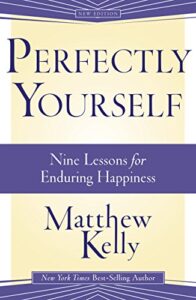
My faith is important to me, so anything in the New Testament. There’s a book right now by Matthew Kelly. As a matter of fact, I gave it to an employee. The title of it is Perfectly Yourself. It’s a journey on how to stop beating yourself up and find who you are.
Scott, I appreciate you. You’ve always been a close friend and being there when I have a question, anytime I’ve ever needed help. With all the work we’ve done over the years together, I value our friendship. We don’t talk enough, but we spend a lot of time together. I appreciate you.
Thanks for having me too.
Important Links:
About Scott McGohan
 “Empowering Healthier Living” 50% of the health care dollar today is lifestyle based. That information screams to us that we have a fighting chance. It also tells us we must fight. Helping people fight the good fight.
Health care strategy, negotiation, execution and communication. Health care costs are often misunderstood and confusing. It is imperative people understand what they do not like. Employers are often the target of discontent from their employees, if employees understand the dysfunctional engine of the health care system it not only deflects the discontent from the employer it squarely places it at the center of the system, where it belongs.
Communication is key
Specialties: Self funded plans, large fully insured plans, public speaking on health care locally and regionally
